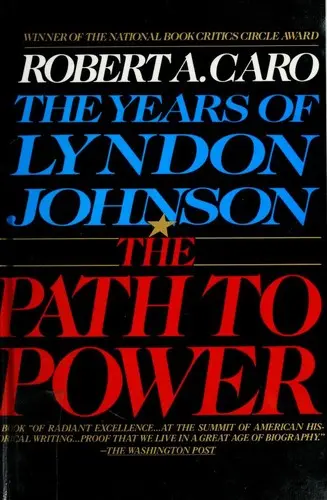
The Path to Power
Read: 2026-02-17
Path to Power is a continuation of Caro's epic dive into power and the men that wield it, following up on his epic The Power Broker depicting Robert Moses. Striking similarities exist between the men: their relative unpopularity in their early years, the subservience which they demanded from their underlings, the extreme work ethics and schedules they maintained.
Both men cultivated strong relationships with other powerful men in their spheres of influence. They used money and corruption from powerful benefactors to grow their own power. They handed highly coveted construction contracts to favored contractors, and expected the contractors to return the favors.
Despite the similarities, however, Johnson developed his own methods for obtaining power. Chief among them is his deference to other men in power. Johnson was able to play the son and goad the egos of powerful men like University President Cecil Evans, Senator Dick Kleberg, Speaker of the House Sam Rayburn, and crucially U.S. President Franklin Delano Roosevelt. This brown-nosing gave Johnson favor from men in high places which helped him secure power in important places throughout his career.
Another striking difference between Moses and Johnson was the willingness Johnson had to change his mind at the drop of a hat. Whereas Moses was famously obstinate in his opinions, Johnson would go whichever way the wind was blowing. Not only that, but Johnson would actively conceal his opinions whenever possible. This had the desired effect of allowing him to play both sides of the aisle as if he were their friend.
The most obvious difference was their attitude towards elections. Moses ran for office early in his career, and upon defeat never ran for public office again. Johnson however would win class president in a stolen election in college and would go on to win stolen elections several times later in life.
In the end, the Path to Power runs deep with relationships and corruption.